
A New Ministry Structure for Our Church
The article below summarizes the presentation given by the Rightsizing Workgroup at Central Conversations on Wednesday, May 20.
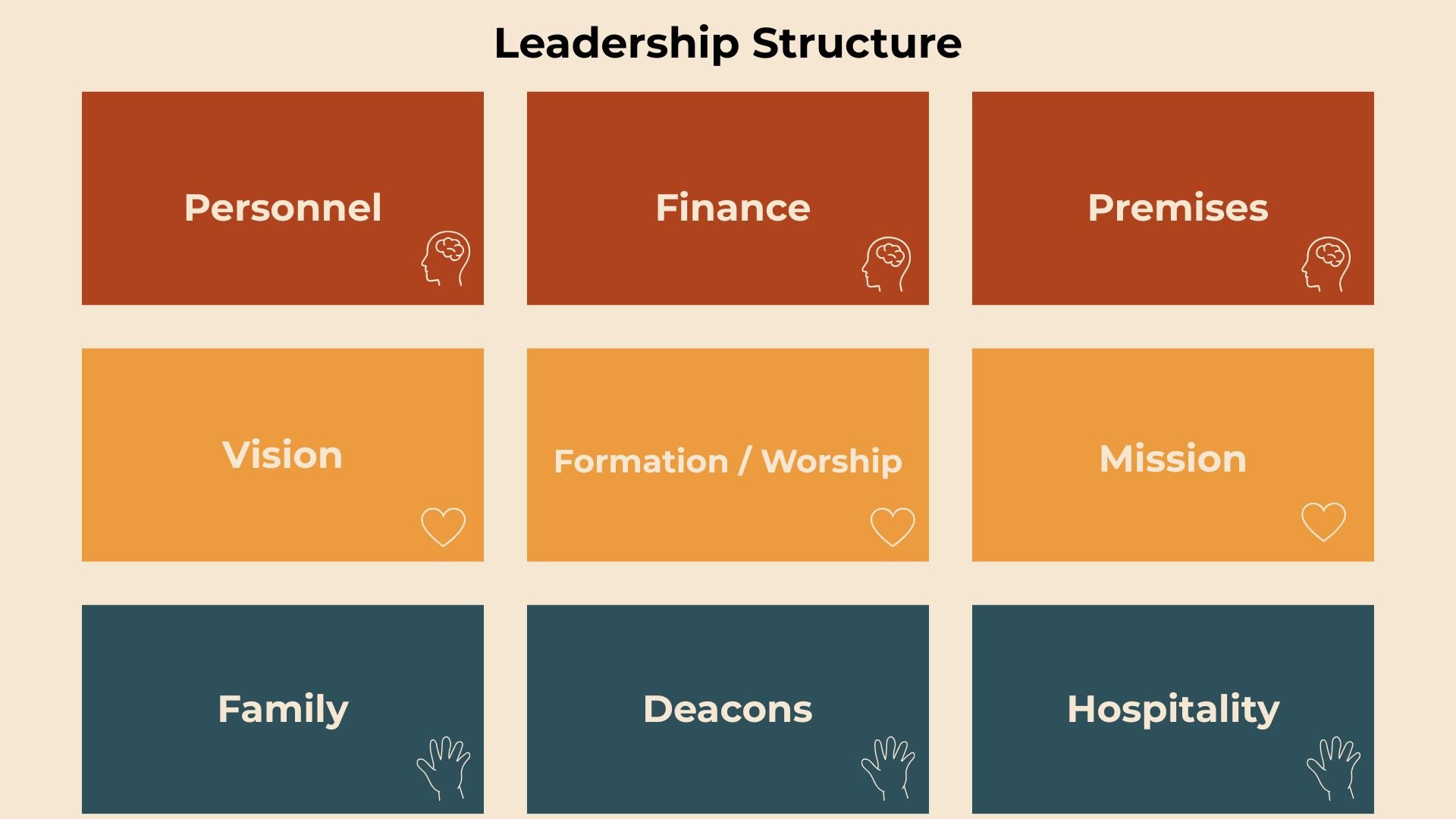
At the most recent Central Conversations, the Rightsizing Workgroup presented their proposal for a new leadership and governance structure that they hope will be more efficient, transparent, adaptable and responsive. To begin, the team proposed replacing the language of committees with teams since it carries a collaborative, action-oriented connotation that better reflects how we want to work together. This new model will have nine teams that are organized into three broad categories that the workgroup describes as the Head (Admin), the Heart (Theology), and the Hands (Ministry), as articulated below.
Leadership Structure
The administrative teams are Finance, Personnel, and Premises. These teams handle the operational and organizational backbone of the church. Finance oversees budgets, income and expenses, and financial policies that support transparency and sustainability. Personnel supports all church staff and key volunteer leaders, assisting with hiring, performance reviews, and a healthy work environment. Premises cares for the building and grounds, from routine maintenance to long-term facility planning.
The theological teams are Vision, Formation/Worship, and Mission. The Vision Team is tasked with discerning and articulating the church's long-term direction, guiding strategic planning through prayer, scripture, and congregational input. The Formation/Worship Team nurtures the spiritual life of the congregation through worship services, discipleship, and educational programming for all ages. The Mission Team leads the church in living out its calling to serve both local and global communities, identifying opportunities, building partnerships, and encouraging outreach.
Finally, the ministry teams are Deacons, Family, and Hospitality. The Deacons provide care, compassion, and practical support to members through visitation, encouragement, and assistance for those in need. The Family Team focuses on the spiritual growth of families with children and youth, developing programs and events that nurture faith across generations. The Hospitality Team creates a welcoming environment for everyone who enters the church, from longtime members to first-time guests, ensuring that all feel seen and valued.
In terms of team Size and composition, most teams will have five members: a chair, a vice chair, and three others. Finance includes a treasurer as well. Hospitality, Missions, and Hospitality have unrestricted membership, meaning there isn’t a cap on membership size, allowing anyone wanting to join to be able to. Deacons also have an unrestricted size, but members are determined through a separate nomination process overseen by the deacon chair and vice chair.
Each team will be led by a chair and a vice chair. A chair is the liaison from the team to the Church Council (explained in the section below) and will have previously served as the vice chair, ensuring those on Church Council are presenting teams they have experience serving on. To give the chair the time to invest in the work of the Council, the vice chair will oversee the planning and coordination of the team.
A few existing groups — including the Preschool, Endowment, Scholarship, Trustees, and Cemetery teams — fall outside this new nine-team framework but will continue to function as they always have. As for other existing teams not included in the new model, some will be absorbed into the appropriate team (like the Transportation Team), some will be dissolved (like the Flowers Team), and some may continue to function as they have previously, just outside of the proposed framework (Cemetery Board).
Governance Structure
The Church Council is composed of all nine team chairs (with vice chairs stepping in when needed). The Council serves as the primary coordinating and discernment body for the life of the church. It ensures alignment across Administration, Theology, and Ministry teams, providing collaborative leadership, sharing information across teams, and guiding the overall direction and health of the congregation. For responsibilities with no specific committee designated, the Church Council will determine the means of implementation. Future chairs and vice chairs will be selected through a discernment process (described below) and affirmed by the congregation, keeping leadership both structured and accountable to the whole community.
Discernment Process
Leadership selection follows a thoughtful discernment process designed to keep the congregation meaningfully involved. When a new leadership term begins, the congregation will have the opportunity to nominate people they believe would be a good fit for various teams and positions. The current chairs and vice chairs (a team of 18 total) will then take those recommendations into account as they nominate the next round of leaders, both team members and the incoming chairs and vice chairs. Those nominations come back to the congregation for affirmation before anything is finalized.
The Rightsizing Workgroup has been thoughtful and deliberate in this process, and we're grateful for their work. At the end of the day, this new structure isn’t the goal, but is merely the tool to help us more easily achieve our goals. As they’ve communicated in the past, nothing has to be permanent, as this plan is designed in a way to be able to changed and adapted to help the congregation better address its vision, values, and mission. Stay tuned for more info, as the plan still needs congregational approval before being implemented.